The Delivered Suite · 2026
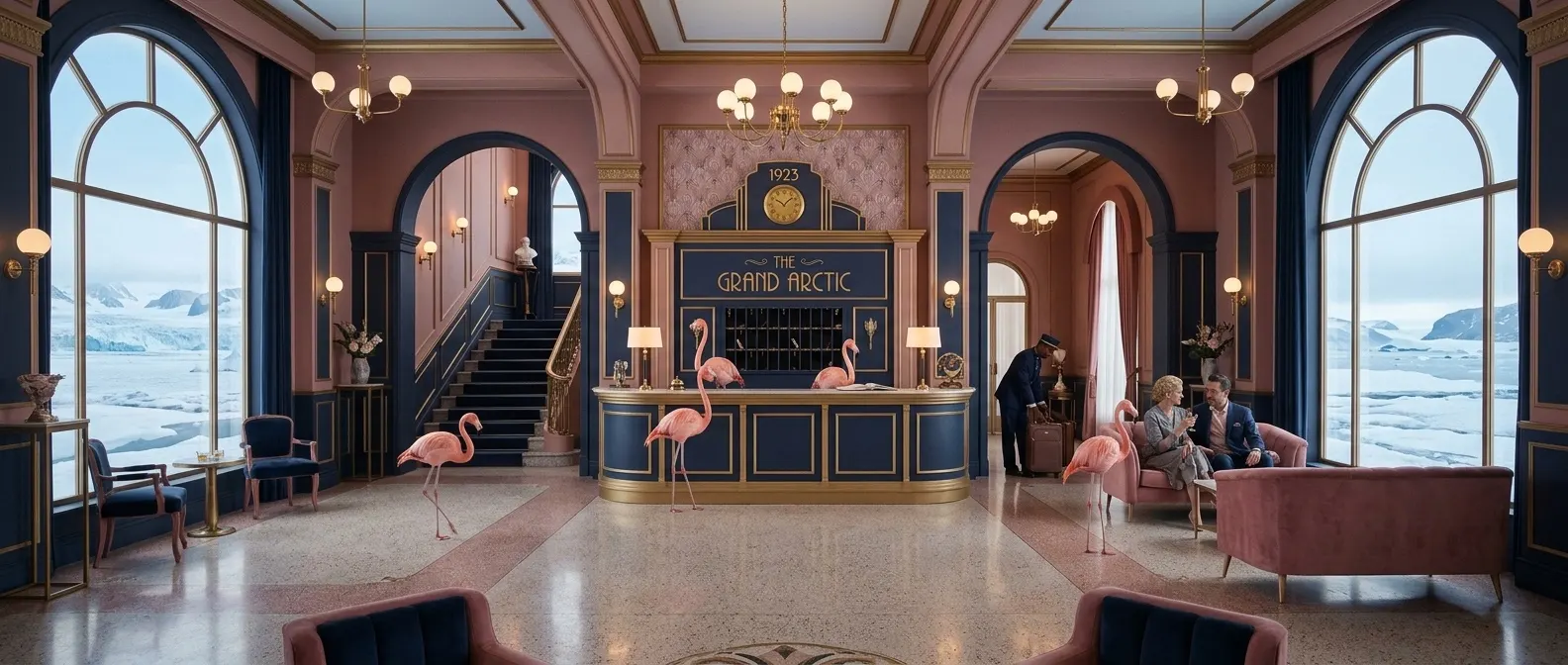
Direction A · L’Hôtel du Bout du Monde
PT
Official Transmission
Peter & MelissaThe Telegram
Six pieces · Two carry a name
Six pieces · Two carry a name
Every piece below is the delivered artwork, not a mock-up of it. The panel is live: put a name in it and watch each piece that carries a name take it, exactly as it does in a real print run.
The pieces that read the same for the whole room carry no name at all — and we say so.
Direction A · The Telegram
The hotel communicates exclusively by telegraph. Every piece in the suite is a transmission — dispatched, received, and replied to. The format is functional. The language is deadpan. The formality is absolute.
Invitations are official transmissions. Save-the-dates are advance notices dispatched months prior. RSVPs are reply cables returned to the hotel. The design language does not emote. It simply conveys.
Not decoration — every one of these has a job, and they are the same inks the pieces below are printed in.
Aa
Aa
The flamingo is the hotel’s one concession to warmth. It appears in the sender section of every transmission — beside the dispatch text, without explanation. The hotel sends formal correspondence and a flamingo arrives with it. The dress code later confirms what the guests may have suspected: Flamingos optional.
A direction is as much what it turns down. This list was written when L’Hôtel du Bout du Monde was chosen, and every piece below holds to it.
Advance transmission dispatched from the hotel — No. PM-2026-I. The hotel announces the date by telegraph months prior. The couple are named; the hotel speaks on their behalf.
It reads the same for the whole room, so it prints once.
no placeholders
Each guest's own code — live, and it scans. No piece in this suite carries a zone for it, so it reaches the guest through their personal link.
Official telegraph transmission — Priority Urgent, No. PM-2026-XII. Full event details. Dress code with its one departure. Acknowledgement required.
This piece already carried a guest's name — it shipped showing real ones. The platform simply sets each guest's own.
{{GUEST_NAME}}
Not every piece should be personalised. This one reads the same for the whole room, so it carries no placeholders — one design, one print run.
no placeholders
Evening service transmission dispatched to each table. Courses as formal telegram fields. The hotel communicates the bill of fare with the same deadpan formality as the invitation.
It reads the same for the whole room, so it prints once.
no placeholders
Table assignment notice. Compact portrait format — the hotel assigns each guest their position with the same formal dispatch language. One transmission per guest.
This piece already carried a guest's name — it shipped showing real ones. The platform simply sets each guest's own.
{{GUEST_NAME}}
Post-event acknowledgement dispatched the morning after. "Your attendance has been entered into the hotel register." The deadpan register holds — even in gratitude.
It reads the same for the whole room, so it prints once.
no placeholders
Every impression below is the same delivered file — Place Card — with a different guest's name set into it, exactly as it comes off a real run. Not a mock-up: it is the piece shown above, personalised by the same code. The names are examples.
12 guests shown across 12 sheets. A real list simply continues — one run, one file per guest.
At the guest's own link the platform renders Invitation — this file, not a separate digital version — and draws a reply panel into it. On the left, as it prints: the container is empty and collapses. On the right, as it opens.
The panel is injected by the platform, not drawn by the design, and the printed card carries no trace of it. The right-hand state shows how it reads; for the platform to compose it into this piece, the file declares the empty container the Living Invitation expects.
The six designs above are delivered as print-ready files — at the true trim size, with the backgrounds and the fonts the printer expects. The two that carry a name become a personalised file for every guest on the list.
Two of the six pieces carry a name. The rest read the same for the whole room, so they print once — and each one says so.
Each guest's own code opens their own page. The same code, read at the door, marks them arrived — so the host knows who is in the room without a clipboard.
The same card, at the same guest’s link, with a reply panel drawn into it. Not a separate digital version in a different style — the design itself, continued. It is further down this page, in both of its states.